Source environmental friendly acetate mirror and comb set for Travel, Salon, Home
Compare 30 listings for the environmental friendly acetate mirror and comb set suitable for travel, salon, and home use. Buyers can review specifications like size, weight, and customization options from manufacturers in Zhejiang, China.
Key considerations
Products List


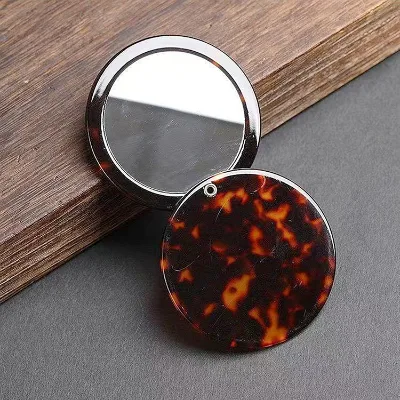

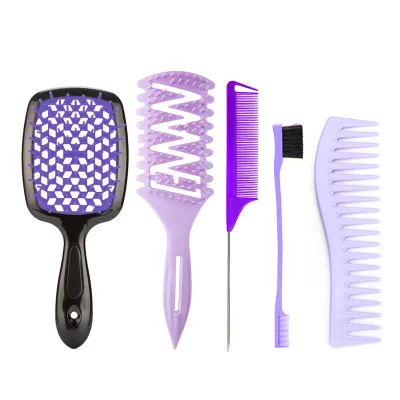
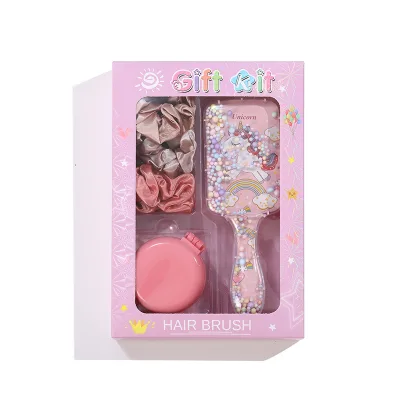
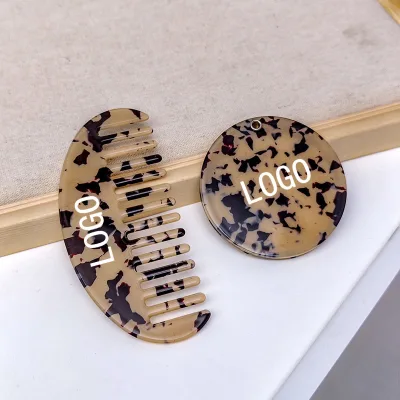

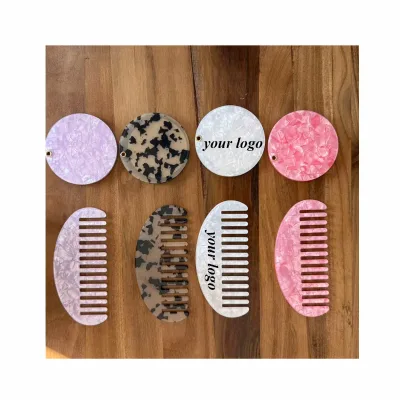
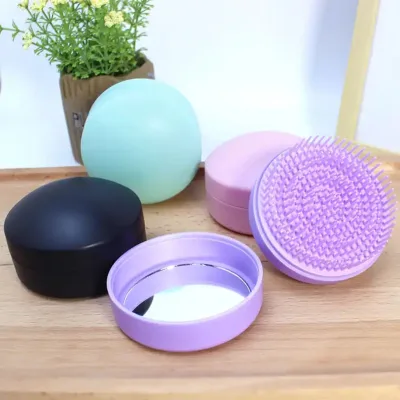

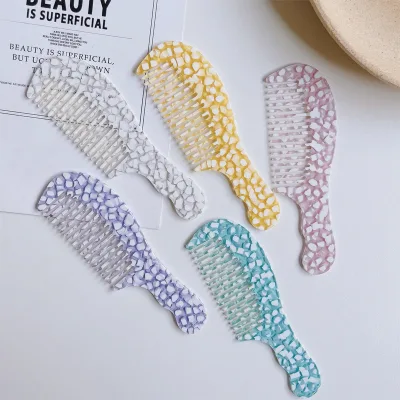
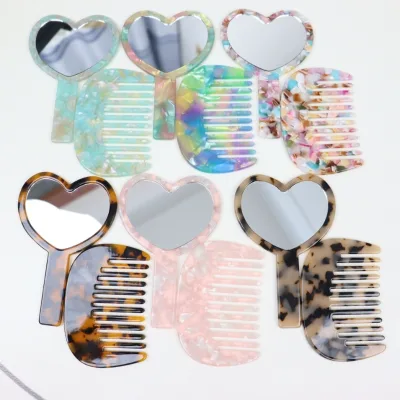


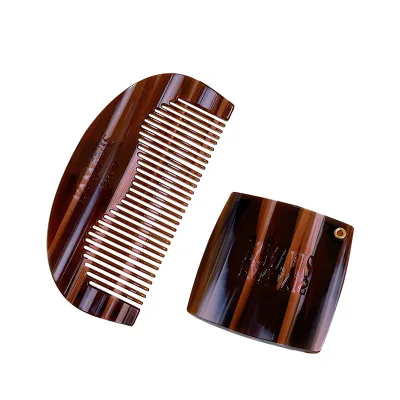


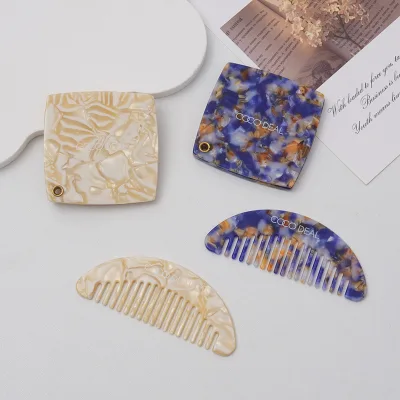
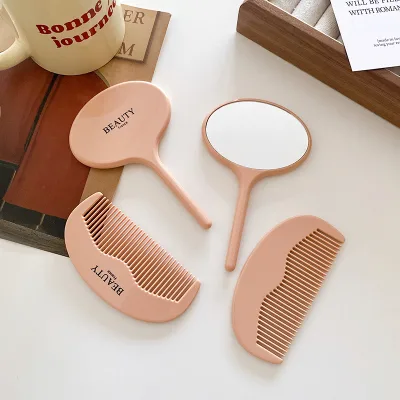
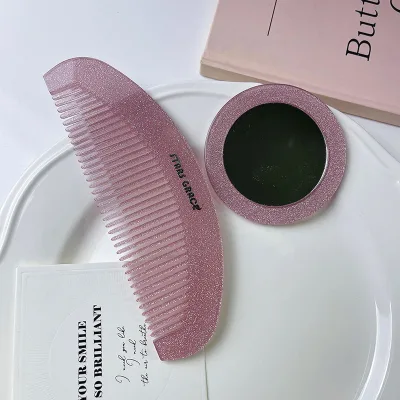



Comprehensive Sourcing Guide
Strategic Sourcing Guide for Environmental Friendly Acetate Mirror and Comb Sets
Understanding Product Composition and Material Integrity
When sourcing a product described as an "environmental friendly acetate mirror and comb set," buyers must first dissect the material claims against observed product attributes. The core material specification for the comb component is explicitly identified as plastic in several observed listings, while the mirror component is noted to be constructed from acetate. This distinction is critical for procurement accuracy. Acetate, often derived from plant-based sources, is frequently marketed as an eco-friendly alternative to standard petroleum-based plastics due to its biodegradability and reduced carbon footprint during production. However, the observed data also lists "Plastic" as a general tooth material, suggesting that the "environmental friendly" claim may apply specifically to the acetate mirror or specific biodegradable comb variants rather than the entire plastic assembly.
The product attributes indicate a "Feature: Biodegradable" status for certain models, which aligns with the acetate material profile. Buyers should verify if the "Plastic" designation refers to a standard synthetic resin or a bio-based polymer. The observed weight ranges vary significantly, from approximately 14 grams to 50 grams, indicating a spectrum of product densities. Lighter units (around 14g) are likely designed for travel or portable use, while heavier units (around 50g) may offer a more substantial feel typical of salon-grade accessories. The "Craft" is listed as "Injection Finish," which can be adapted to other finishes, allowing for surface treatments that enhance the aesthetic appeal of the acetate mirror.
Technical Specifications and Dimensional Standards
The technical landscape of these sets is defined by a variety of model numbers and dimensional standards, reflecting a diverse catalog rather than a single monolithic product. The observed specifications reveal a wide range of sizes. For the comb and mirror components, standard dimensions include 125.8cm, 194.5cm, and 23cm6.5cm for larger units, while compact travel versions may measure 6.57.52.8cm or 107cm. The mirror component specifically is observed in sizes such as 7cm and 10X6X2 cm, with a single gross weight of 0.080 kg.
The "Unfolding Size" for certain models is recorded as 18.5*7cm, suggesting that some sets include foldable or collapsible designs to enhance portability. This feature is particularly relevant for the "Travel" and "Home" suitability attributes observed in the product data. The mirror itself is available in geometric elements with styles described as "Fashion," and colors include Brown Round and Brown Square options, with custom color requests accepted upon inquiry. The "Pins Feature" for certain brush or comb attachments includes anti-static and heat-resistant properties, which are essential functional specifications for hair styling tools.
| Product Attribute | Observed Specification Range | Typical Application Context |
|---|---|---|
| Dimensions | 6.57.52.8cm to 23cm*6.5cm | Travel, Salon, Home |
| Weight | 14g to 50g | Portable vs. Heavy-duty |
| Mirror Size | 7cm to 10X6X2 cm | Personal grooming, Vanity |
| Material | Acetate (Mirror), Plastic (Comb) | Eco-conscious styling |
| Finish | Injection Finish (Customizable) | Aesthetic customization |
Compliance, Certification, and Environmental Claims
In the B2B sector, the term "environmental friendly" requires rigorous verification through third-party certifications. The supplied data explicitly lists "Reach" and "RoHS" as available certificates for these products. Reach (Registration, Evaluation, Authorisation and Restriction of Chemicals) is a European Union regulation that ensures chemicals used in manufacturing are safe for human health and the environment. RoHS (Restriction of Hazardous Substances) limits the use of specific hazardous materials in electrical and electronic equipment, though its application here likely pertains to the plastic components and any metallic pins or hardware.
Buyers must treat the "Eco-Material" and "Environmental Friendly" attributes as observations that require validation. While the data mentions "Biodegradable" as a feature, the extent of biodegradability and the conditions required (e.g., industrial composting vs. home composting) are not specified in the provided facts. The "Certificate: Reach, RoHS, Ect" entry suggests that suppliers may offer additional certifications, but the specific list is not exhaustive. Procurement teams should request current test reports to confirm that the acetate and plastic components meet the specific environmental standards required by their target markets, particularly if exporting to the EU or North America. The "Standard" listed as "12*5.8cm" etc., refers to physical dimensions rather than regulatory compliance standards, so buyers must not conflate product size with safety or environmental certifications.
Cost Drivers and Economic Factors
The pricing structure for these sets is influenced by material selection, customization levels, and order volume. The observed price range in USD spans from 0.16 to 20, a significant variance that reflects the difference between basic plastic combs and premium acetate mirror sets with custom branding. The lower end of the spectrum likely corresponds to standard injection-molded plastic combs with minimal packaging, while the higher end encompasses the acetate mirror, custom finishes, and specialized packaging.
Minimum Order Quantity (MOQ) is another critical cost driver, with observed ranges from 1 to 5000 units. Small MOQs (1-100) are suitable for sampling or testing the market, while larger orders (up to 5000) may unlock better unit economics. The "Customization: Available" attribute implies that costs will increase for custom logos, colors, and packaging. The "Service: OEM&ODM" capability indicates that suppliers can modify the product design, which adds to the development cost but reduces long-term unit costs through economies of scale.
Packaging costs also play a role. The data lists "Export Carton" as a standard packing method, with specific configurations like "1PC/OPP Bag, 200PCS/CTN." Custom packaging, such as branded OPP bags or eco-friendly cartons, will impact the final landed cost. Buyers should factor in the "Sample Time" of 3-5 days and "Production Time" of 25-35 days when calculating total procurement costs, as expedited shipping or rush production fees may apply.
Supplier Evaluation and Operational Capabilities
Selecting a supplier for acetate mirror and comb sets requires a deep dive into their operational capabilities. The data indicates that the "prod_origin" is Zhejiang, China, a major manufacturing hub known for plastic and hair accessory production. Suppliers in this region typically possess mature supply chains for acetate and injection molding. Key evaluation criteria include the "Mould and sample making" capabilities, which are explicitly listed as "Accepted" and "Provided." This suggests that suppliers can develop custom molds for unique designs, a crucial factor for brands seeking differentiation.
The "Service" attributes highlight OEM (Original Equipment Manufacturer) and ODM (Original Design Manufacturer) support, meaning suppliers can produce based on buyer designs or offer their own designs for branding. The "LOGO: Accept Customized Logo" and "Provide mould making and sample making service" confirm a high level of flexibility. However, buyers must verify the supplier's capacity to handle the "Production Time" of 25-35 days reliably. The "Sample Time" of 3-5 days is relatively fast, indicating an agile prototyping process.
When evaluating suppliers, buyers should assess their ability to manage the "Craft" variations, such as switching from "Injection Finish" to other finishes. The "Feature: Hand-Made" observation for some products suggests a hybrid manufacturing process, which may affect consistency and scalability. Buyers should request evidence of quality control processes, especially for the "Anti-Stratic" and "Heat Resistant" features, to ensure these claims hold up under real-world usage conditions.
Quality Control and Long-Term Procurement Strategy
Quality control for acetate and plastic sets must address both aesthetic and functional integrity. The "Feature: Easy to Clean" and "Portable Size" are key performance indicators that should be tested. For the mirror, the "Geometric" elements and "Fashion" style must remain consistent across batches. The "Color" options, including "Brown Round Mirror Only" and "Brown Square Mirror Only," require strict color matching protocols to avoid batch-to-batch variation.
Long-term procurement strategies should focus on building a relationship with suppliers who can maintain the "Environmental Friendly" claim over time. This involves regular audits of the material sourcing for acetate and plastic to ensure they remain compliant with evolving environmental regulations. The "Certificate: Reach, RoHS, Ect" should be reviewed annually to ensure continued compliance. Additionally, the "Packaging customization" should be optimized to reduce waste, aligning with the "Eco-Material" and "Biodegradable" brand positioning.
Buyers should also consider the "Application" scope, which includes "Hair Accessories" and "Make-up Mirror." Diversifying the product line to include these applications can mitigate market risks. The "Function: Hair Brushing, Hair Styling, Ect" indicates versatility, but the specific "Brush Type: Vent Hair Brush" suggests that some models may include brush components, requiring additional quality checks for bristle attachment and durability.
Application Scenarios and Market Positioning
The versatility of these sets allows for positioning in multiple market segments. The "Suitable for: Travel, Salon, Home, Hotel" attributes indicate a broad application base. For the travel market, the "Portable Size" and lightweight nature (14g) are primary selling points. In the salon and hotel sectors, the "Heat Resistant" and "Anti-Stratic" features are essential for professional use. The "Fashion" style and "Geometric" elements appeal to consumers looking for aesthetic value in their grooming tools.
The "Usage: Make-up Mirror" and "Application: Hair Accessories" suggest that these products can be marketed as complete grooming kits. The "Customization: Available" feature allows brands to create exclusive sets for specific retail channels, such as boutique hotels or high-end salons. The "Eco-Material" and "Biodegradable" features are particularly strong selling points for environmentally conscious consumers and brands with sustainability mandates.
In conclusion, sourcing an environmental friendly acetate mirror and comb set involves navigating a complex landscape of material specifications, certification requirements, and customization options. By leveraging the observed data on dimensions, weights, and certifications, buyers can make informed decisions that align with their quality standards and market positioning. The key to success lies in rigorous supplier evaluation, clear communication of customization needs, and a commitment to verifying environmental claims through documented testing and certification.
FAQs
What materials are used for the mirror and comb in these sets?
The mirror component is constructed from acetate, while the comb teeth are typically made of plastic. Some models feature biodegradable properties, but the specific tooth material is listed as plastic in the observed data.
Can buyers request custom logos and packaging for these sets?
Yes, customization is available for logos, colors, and packaging configurations. Suppliers accept customized logo requests and offer OPP bag or export carton packing options tailored to buyer specifications.
What certifications are available for these environmental friendly products?
Reach and RoHS certifications are explicitly listed as available for these products. Buyers should verify current test reports to ensure compliance with specific regional environmental and safety regulations.
How long does it take to produce an order of these sets?
The standard production time ranges from 25 to 35 days. Sample making is faster, typically requiring 3 to 5 days, before full-scale manufacturing begins.
What is the price range for sourcing these mirror and comb sets?
The observed price range spans from 0.16 to 20 USD per unit. Costs vary significantly based on material selection, customization levels, and order volume requirements.
Which dimensions are standard for the mirror and comb components?
Standard dimensions vary by model, with sizes like 12*5.8cm, 19*4.5cm, and 10*7cm observed. The mirror component specifically appears in sizes such as 7cm and 10X6X2 cm.
Can suppliers provide mold making services for custom designs?
Yes, suppliers explicitly accept requests for mold making and sample making services. This capability allows for unique designs and supports OEM and ODM production requirements.